With BOXofGREEN, you achieve a number of advantages over traditional tree planting.
Advantages benefiting both trees, biodiversity, landscape - and economy.
✅ Simpler planting of new trees.
✅ Fewer workflows in planting/setting.
✅ Fewer gardening visits for tree care.
✅ Less use of irrigation.
✅ Less driving = more environmentally friendly.
✅ Increased use of natural rainfall = reduces pressure on the sewage system during heavy rain.
✅ No visible water tanks.
✅ More robust.
✅ Faster growth.
✅ High root activity in rock wool = shorter binding period.
✅ Ensures better root establishment in urban soil, where there is limited space for growing media.
To plant the tree correctly, start by digging a square hole that is plenty large for the BOXofGREEN box.
Place the entire box, including the hessian sack, into the hole and fill growing soil up on the inner sides, while filling the outside with sand or soil.
Place the tree in the center of the hole and fill up with growing soil, while also filling sand or soil on the outside.
Tamp the soil thoroughly to ensure stability.
Secure the tree with 2-3 stakes, which should be placed on the inside of the BOXofGREEN box. (If the soil is very clayey, it is recommended to make a macadam structure under batts).
Finish by adding 320-400 liters of water. Job done!
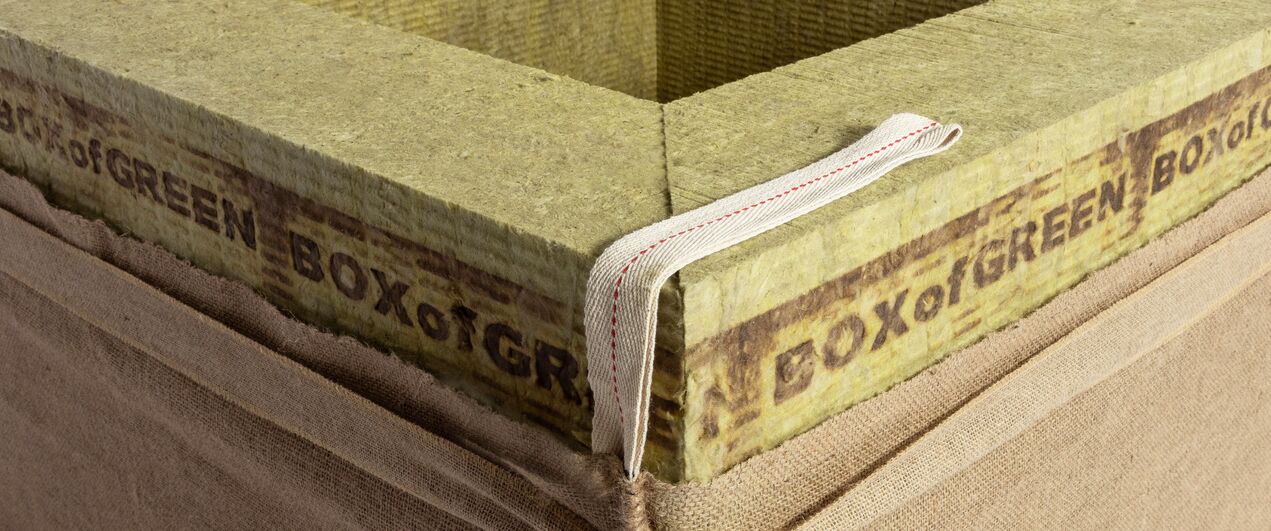
BOXofGREEN's stone wool is made from natural basalt stone. The stone wool has a porosity of approximately 97%, which means that the production requires a relatively limited amount of raw materials.
Basalt – a natural material
BOXofGREEN's stone wool is primarily made from basalt – a natural, volcanic rock that is formed and renewed through the earth's geological activity. Every year, the earth produces 38,000 times more volcanic rock than is used for the production of stone wool. Our partner Lapinus/ROCKWOOL uses basalt from, among others, the Eifel region in Germany. The raw material is processed into stone wool at, among others, ROCKWOOL's facility in Hobro, Denmark. The stone wool consists of approximately 97.5% basalt stone, about 2.4% resin binder, and less than 1% additive for water management. (% of total weight)
Circularity: Almost 50% recycled material
In addition to basalt, recycled stone wool products are an important part of the raw material in BOXofGREEN. Stone wool can be recycled infinitely without loss of quality. Through ROCKWOOL's recycling program Rockcycle©, used stone wool is collected and recycled into new products.
This helps to reduce the consumption of new resources and minimizes the amount of waste. Additionally, ROCKWOOL uses residual materials from other sectors in the production, which further strengthens the circular value chain.
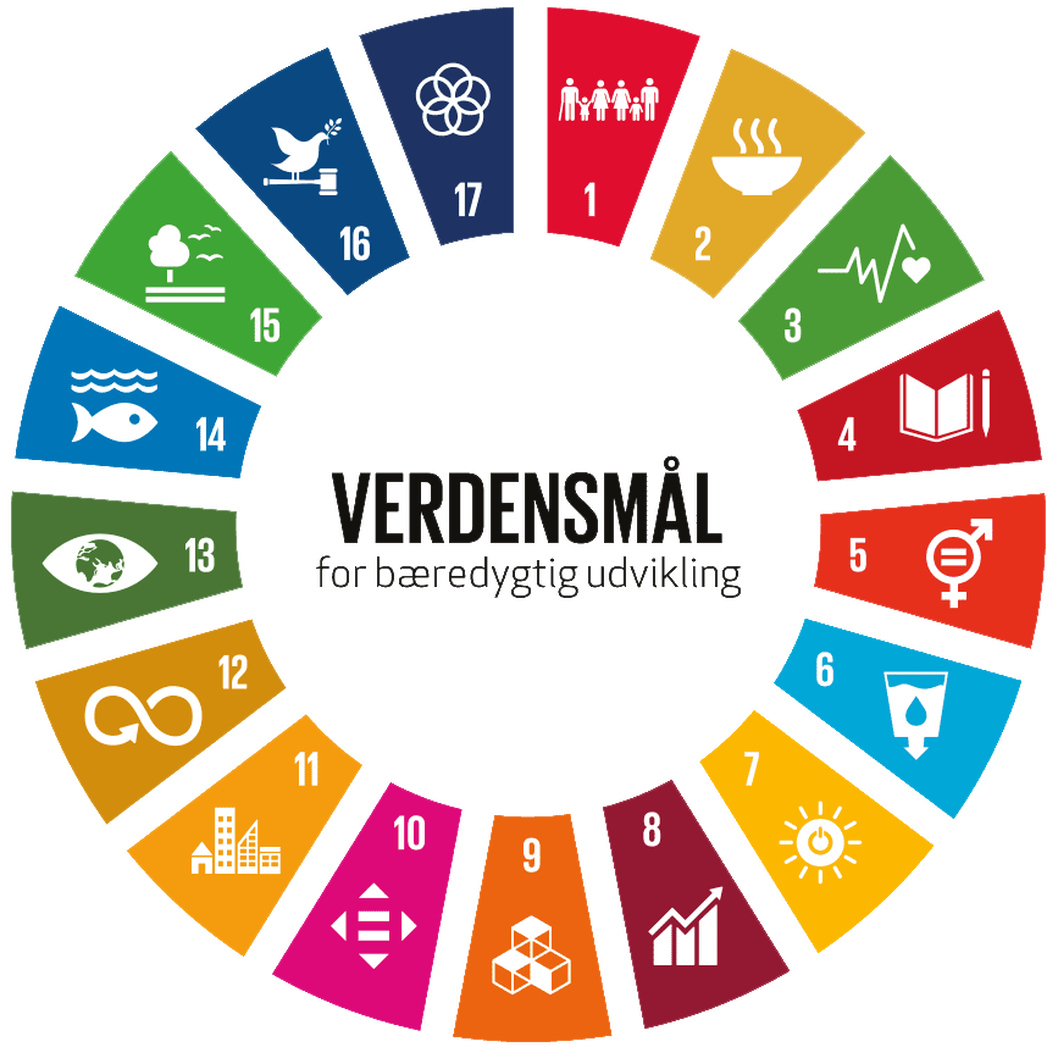
By choosing BOXofGREEN, you contribute to promoting circular economy, reducing waste, and supporting the UN's Sustainable Development Goals – particularly goal 12 on responsible consumption and production.
Transparency and accountability
ROCKWOOL actively works with transparency and sustainability.
According to the company's sustainability report for 2022:
• ROCKWOOL ranks 16th on the list of the world's most sustainable companies and is number 1 in the building products category (Corporate Knights Global 100).
• In 2022, ROCKWOOL reduced the CO2 intensity of their products by 17% compared to 2015.
Safe for the earth
BOXofGREEN's stone wool is safe to use underground and does not cause any soil contamination. The material complies with Dutch soil quality regulations (BBK), which are administered by Bodem+ under Rijkswaterstaat, the Ministry of Infrastructure and Water Management in the Netherlands.
Hessian
For certain parts of the product, we use hessian made from jute – a plant fiber that is 100% biodegradable.


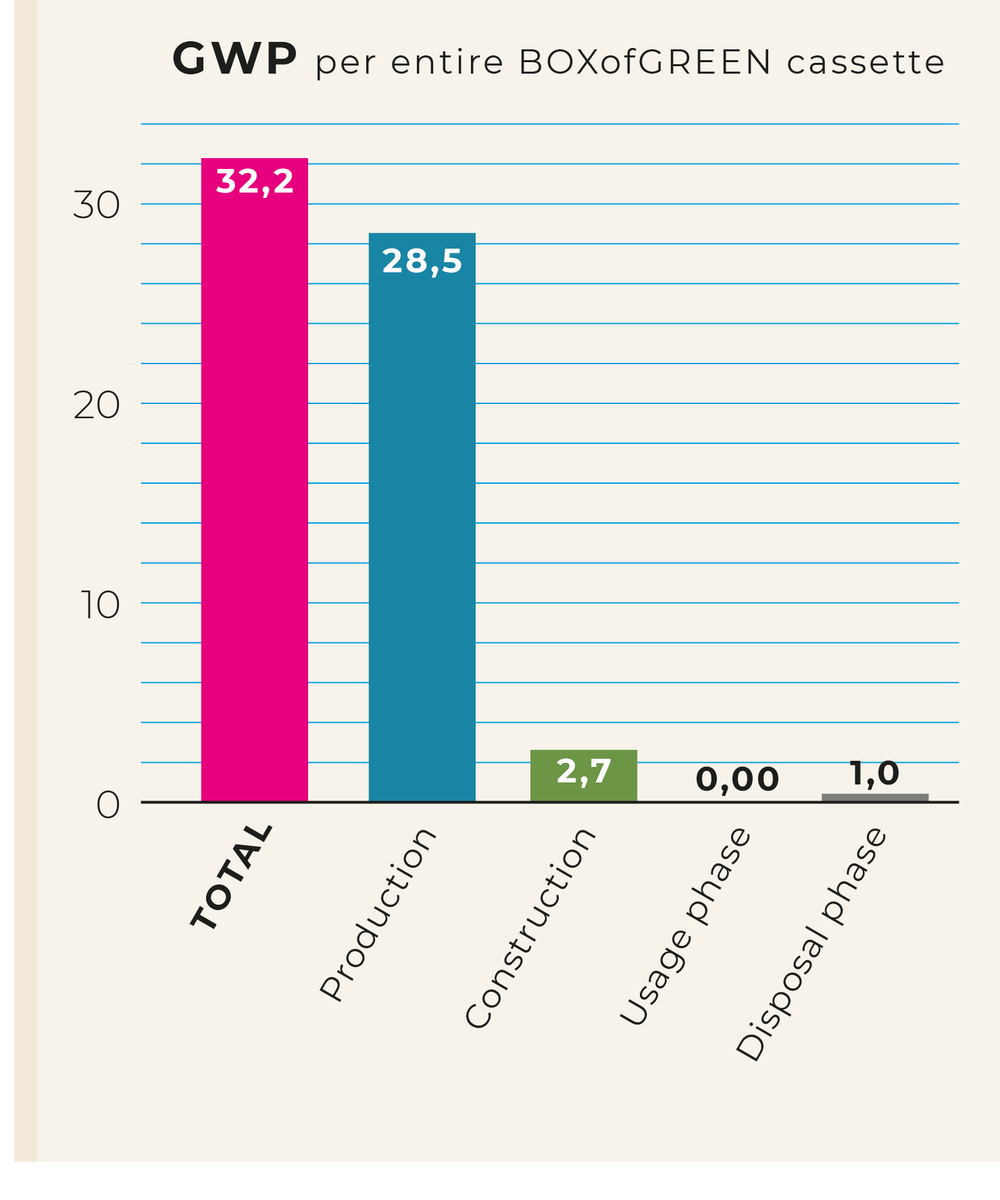
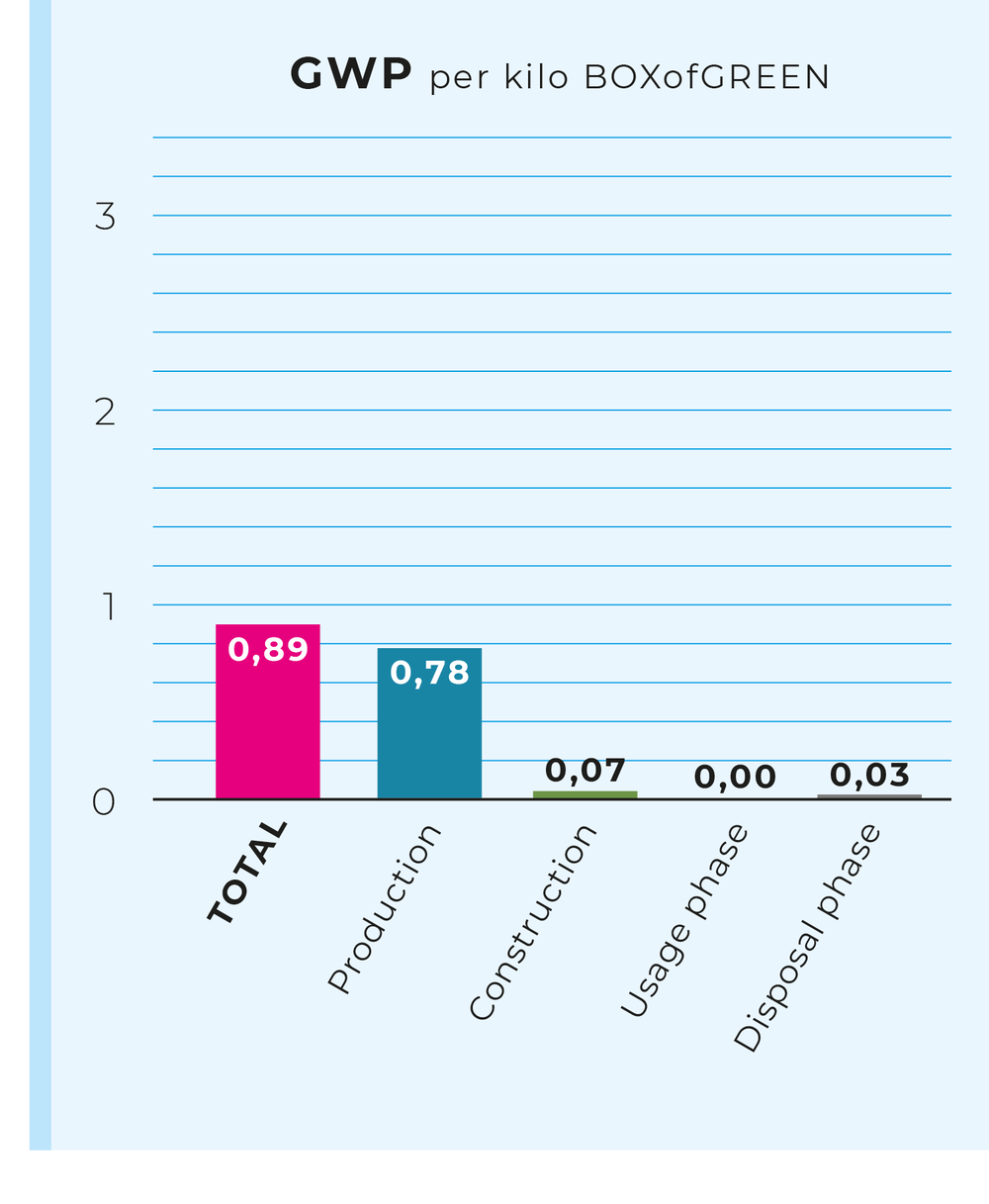
BOXofGREEN's climate footprint (GWP) varies through the different phases of stone wool, from production and consumption to waste management. Here is an overview of the total greenhouse gas emission and climate effect (GWP) across the various phases of our products' life cycle. Contact us if you need the numbers elaborated.
GWP stands for Global Warming Potential, and is measured in the unit kg CO2-equivalents (kg CO2e), which covers a wide range of gases, including CO2. GWP Total is a summary of the emissions from phases A1-C4. The climate footprint is documented in our third-party verified environmental product declarations (EPDs).
Phase Production: Extraction of raw materials, Transport to manufacturing, Material manufacturing
Phase Construction: Transport to construction site, Installation
Phase Use: Use, Maintenance, Repair, Replacement, Renovation, Energy consumption, Water consumption
Phase Disposal: Demolition, Transport to waste treatment, Waste treatment, Disposal
BOXofGREEN wants to contribute to a more sustainable environment locally and on our planet.
We design and deliver innovative, effective, sustainable technologies and solutions for tree planting. And it is core to our business to help create a greener environment, lower water resource consumption, and more focus on biodiversity.
We are working to streamline and optimize our own and our customers' raw material consumption, especially our energy and water use. Both by consuming less and by - together with our partners and suppliers - developing new, environmentally friendly and innovative solutions. Therefore, we support the UN's Sustainable Development Goals.

Read more about the 17 specific goals here

Here you can calculate the savings when you use BOXofGREEN compared to traditional tree planting.
Enter the information in the calculation model, and get an idea of how much you can save in the trees' establishment phase.
Note that the calculator only looks at the economic savings. Contact us if you also want insight into the CO2 savings from planting trees in BOXofGREEN.